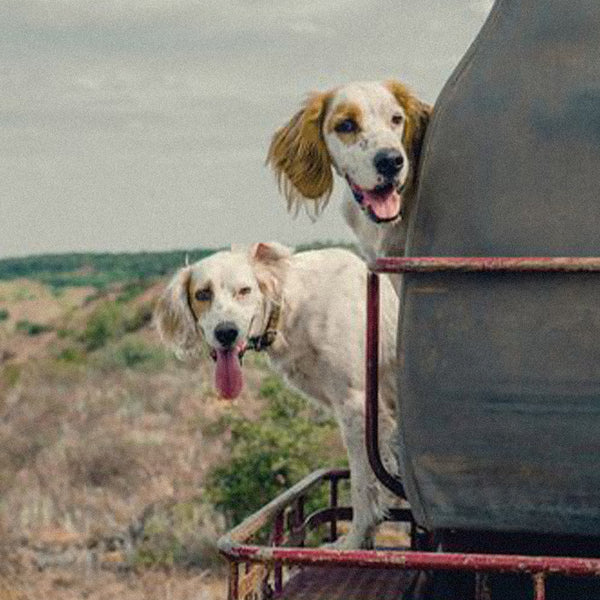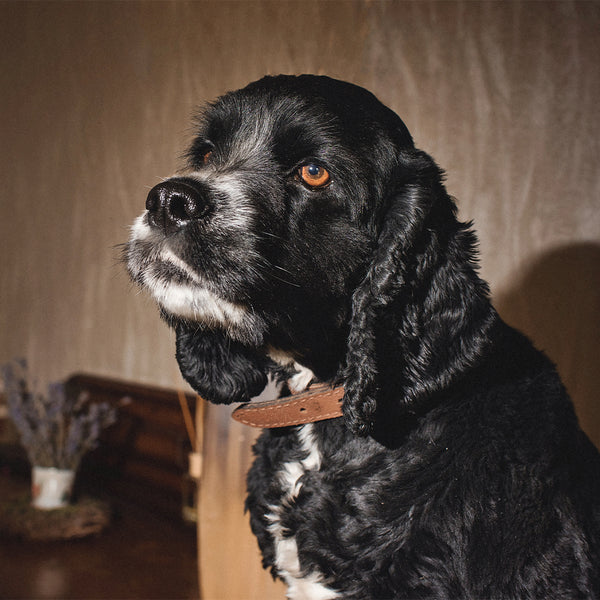

Dogs are descended from animals where showing pain meant becoming a target. The instinct to mask discomfort is deeply embedded — which means that by the time your dog is obviously limping or refusing to get up, the underlying joint degeneration has often been progressing for months or years. The owners who intervene earliest and see the best long-term outcomes are the ones who learned to read the subtle signs.
The behavioral signs before the physical ones
Hesitation before jumping
This is the single most reliable early indicator. A dog with healthy joints jumps without thinking — onto furniture, into cars, up stairs. When a dog starts pausing at the bottom of the stairs, shifting weight and looking up before committing, or doing a little bouncing motion before jumping onto the sofa, they are calculating whether the pain of impact is worth it. This hesitation often predates obvious limping by 6–18 months.
The "warming up" pattern
Watch your dog for the first 5–10 minutes after they get up from sleeping. A dog with early joint inflammation often moves stiffly, almost gingerly, then gradually loosens up as the joint warms and synovial fluid redistributes. This pattern — stiff after rest, better after moving — is characteristic of osteoarthritis and is easy to miss because by the time you're fully paying attention, the dog has already warmed up and appears normal.
Sleeping more, initiating play less
This one is easy to attribute to "getting older" or the dog just having a tired day. But a gradual shift in activity level — less initiation of play, shorter play sessions, preferring to lie down while watching rather than participate — is often a pain response. A dog in chronic low-grade pain conserves energy and avoids activities that aggravate the discomfort.
Position changes when sitting or lying
Dogs with hip discomfort often sit with one or both hind legs extended to the side rather than tucked under (called "puppy sitting"). Dogs with elbow or shoulder pain may shift weight when standing, alternately relieving pressure on one front leg. Watch where your dog puts their weight and whether they seem comfortable in the positions they choose.
Reduced grooming of certain areas
A dog with hip or lower back pain may stop grooming their hind end because the movement required causes discomfort. You might notice the coat looking unkempt around the tail base or hindquarters. A dog with shoulder pain may have difficulty grooming the neck and upper back areas.
Personality changes
A dog in chronic pain may become more irritable, less tolerant of being touched in certain areas, or generally less engaged. This is easy to misread as behavioral issues. If a friendly dog becomes reactive when touched around the hips, spine, or shoulders, pain is the most likely explanation and warrants investigation before behavior modification.
The physical exam you can do at home
With your dog standing or lying relaxed, gently palpate along the spine, hips, and shoulders. Move each limb slowly through its natural range of motion. You're looking for: flinching or pulling away at specific points, resistance to movement at the end of the joint's range, a grinding or clicking sensation (crepitus) in the joint, or heat in specific areas relative to surrounding tissue.
You're not diagnosing anything — you're gathering information to share with your vet and establishing a baseline so you can track changes over time.
Which dogs are highest risk
Joint pain isn't random. These factors significantly elevate risk:
- Large and giant breeds: German Shepherds, Labradors, Golden Retrievers, Rottweilers, Great Danes. Hip and elbow dysplasia are endemic to these breeds.
- Dogs over 7 years old: Joint degeneration is universal with age — the question is rate, not if.
- Dogs with a history of injury: Previous sprains, fractures, or soft tissue injuries significantly accelerate joint degeneration at the affected sites.
- Overweight dogs: Every extra pound means 3–4 pounds of force on joints during movement. This is one of the highest-modifiable risk factors.
- Working and sport dogs: High cumulative activity volume accelerates cartilage wear regardless of breed.
What to do when you notice these signs
A veterinary evaluation is appropriate to rule out structural issues requiring medical or surgical management. For mild to moderate joint changes, supplementation is the first-line non-pharmaceutical intervention:
Glucosamine HCl + chondroitin sulfate: Supports cartilage synthesis and inhibits degradation. Takes 4–8 weeks of consistent daily use to produce measurable improvement — don't evaluate at 2 weeks.
MSM (Methylsulfonylmethane): Addresses the inflammatory component of joint pain, which is the primary driver of day-to-day discomfort. Works faster than the structural compounds and explains why pain often improves before mobility does.
Turmeric/curcumin: Inhibits COX-2 and NF-κB inflammatory pathways, functioning similarly to natural NSAIDs without the gut lining damage associated with long-term pharmaceutical use.
Read the full breakdown in our guide on dog joint supplements and our article on glucosamine vs. chondroitin. MAYA's Joint Care supplement combines all four active ingredients at research-supported doses.
The case for not waiting
Joint cartilage doesn't regenerate meaningfully once it's gone. Every month of unaddressed inflammation causes structural changes that can't be reversed — they can only be managed. The dogs that maintain the best mobility into old age are the ones whose owners started paying attention to the subtle signs and intervened before the damage was significant. If you're seeing any of the patterns above, start now rather than waiting for them to get worse.