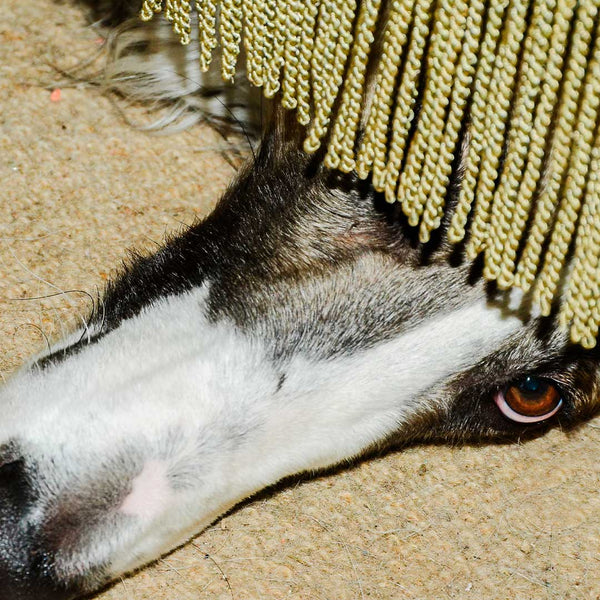


Whippets are elegant, lean sighthounds — built for speed and grace, with almost no body fat and extremely thin skin. That physiology creates specific health considerations: they feel the cold acutely, their thin skin is easily irritated, and their lean body type means any systemic illness quickly affects appearance. The Whippet health profile is generally favorable compared to many breeds, but specific vulnerabilities reward proactive management.
The Whippet health profile
Cardiac conditions: Whippets, like other sighthound breeds, can develop dilated cardiomyopathy (DCM) at elevated rates compared to the general dog population. Sighthound hearts are anatomically different — they have naturally larger cardiac chambers and lower resting heart rates. Distinguishing normal sighthound cardiac anatomy from pathological DCM requires a veterinary cardiologist familiar with sighthound physiology. Omega-3 supplementation is appropriate support for cardiac health.
Skin sensitivity: The Whippet's single, thin coat provides minimal barrier protection. Environmental allergens contact the skin directly, and cold, wet, or abrasive surfaces cause irritation. Skin reactions in Whippets are often contact-based as much as atopic. Omega-3 supports skin barrier function and reduces the mucosal inflammation of contact-irritated skin. Biotin and zinc support the minimal skin barrier of a low-oil-gland coat.
Anesthesia sensitivity: All sighthound breeds are sensitive to barbiturate anesthetics due to low body fat (limited drug storage) and high metabolic rate. This is primarily relevant for surgical procedures — standard supplements don't interact with this sensitivity.
Eye conditions: Whippets have elevated rates of progressive retinal atrophy (PRA) in some lines. DHA (docosahexaenoic acid from omega-3) is the dominant fatty acid in photoreceptor cell membranes — omega-3 supplementation is relevant for retinal health in at-risk dogs.
The Whippet supplement protocol
- Omega-3 (EPA+DHA) — highest priority; addresses cardiac health, skin barrier, retinal health, and systemic anti-inflammatory simultaneously; medium-breed dosing for a typically 25–40 lb dog
- Skin & Coat (biotin + zinc + vitamin E) — supports the thin, low-oil-gland Whippet skin
- Probiotics — gut-immune calibration; particularly relevant for the subset with environmental sensitivity
Lean-breed note: Whippets have very little reserve body fat. Supplement formats should be low-calorie — not the high-fat chew formats calibrated for heavily built breeds.
Related: skin supplement guide · omega-3 guide · heart health guide · probiotics guide · allergy guide.